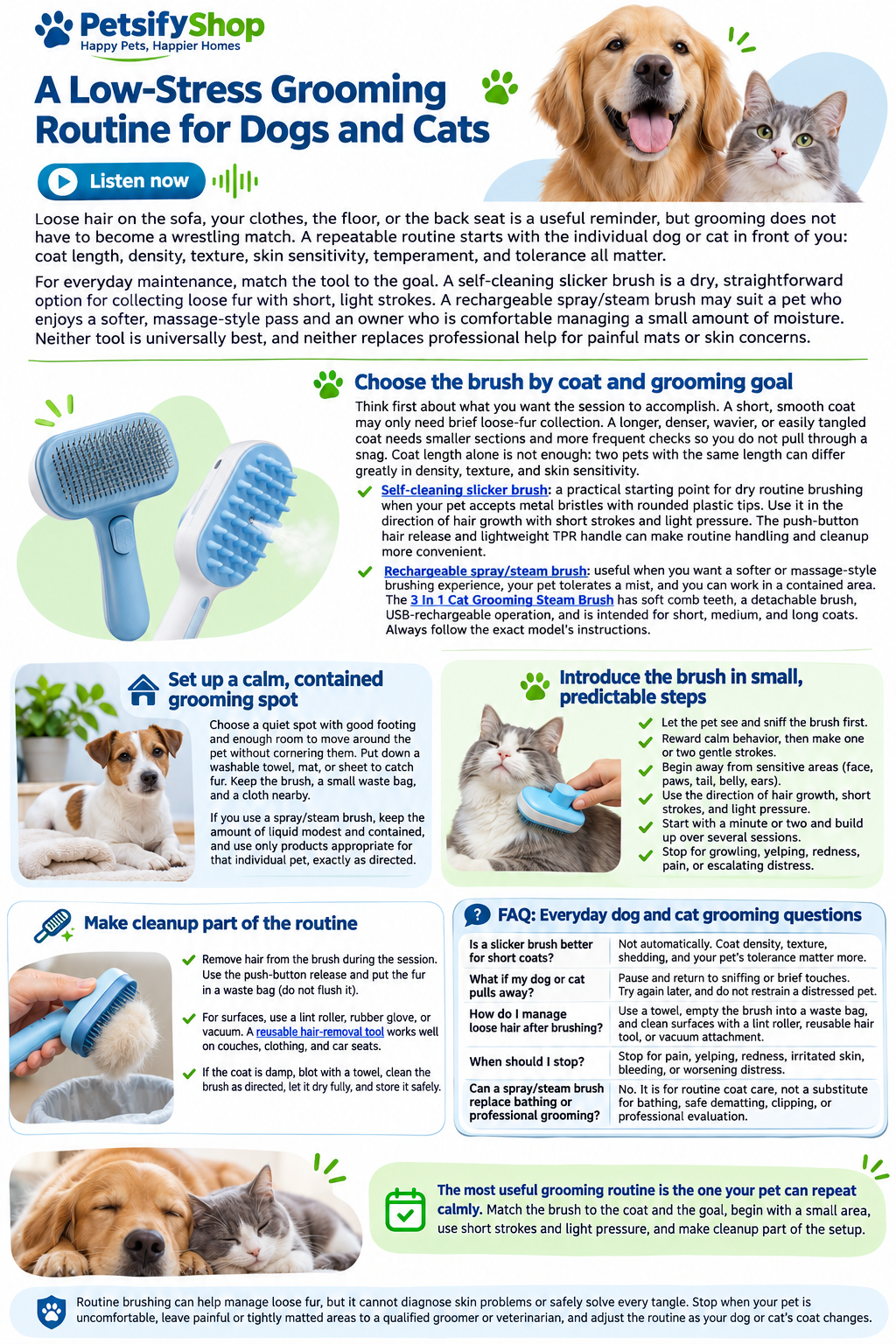
Loose hair on the sofa, clothes, floor, or back seat is a reminder that grooming matters—but it does not have to become a wrestling match. A repeatable routine starts with your individual dog or cat: coat length, density, texture, skin sensitivity, temperament, and tolerance all matter.
For everyday maintenance, match the tool to the goal. A self-cleaning slicker brush is a dry option for collecting loose fur with short, light strokes. A rechargeable spray or mist brush may suit pets who tolerate moisture and a massage-style pass. Neither tool is universally best, and neither replaces professional help for painful mats or skin concerns.

Choose the brush by coat and grooming goal
Think first about what you want to accomplish. A short, smooth coat may only need brief loose-fur collection. A longer, denser, wavier, or easily tangled coat needs smaller sections and more frequent checks. Coat length alone is not enough.
A self-cleaning slicker brush can be a practical starting point for dry routine brushing if your pet accepts its bristles. Brush in the direction of hair growth with short strokes and light pressure. Do not force the brush through a tight mat. The push-button hair release helps with cleanup.
A rechargeable spray/steam brush may be useful if your pet tolerates mist. Compare the cat steamer brush and the 3 In 1 Cat Grooming Steam Brush by their individual instructions and intended coat types. Despite the product names, do not assume any device produces hot steam or can replace bathing.
Set up a calm, contained grooming spot
Choose a quiet spot with good footing and room to move without cornering your pet. Lay down a washable towel or mat to catch fur. Keep the brush, a small waste bag, and a cloth nearby.
If using a spray brush, keep moisture modest and contained. Use only liquids expressly allowed by the product instructions and appropriate for your pet. Keep liquid away from eyes, ears, mouth, broken skin, and surfaces that should not get damp.
Introduce the brush in small, predictable steps
Let your pet see and sniff the brush. Reward calm behavior, touch the brush briefly to the shoulder or side, then try one or two gentle strokes. Stop while the experience is still going well.
Begin away from sensitive areas such as the face, paws, tail, belly, and ears. Follow hair growth, use short controlled strokes and light pressure, and check the skin after a few passes. The first session may last only one or two minutes.
If your pet pulls away, pause or end the session. Stop for growling, repeated escape attempts, yelping, redness, pain, or escalating distress. Do not restrain a distressed pet just to finish grooming.
Make cleanup part of the routine
Remove fur from the brush throughout the session. With a push-button slicker brush, collect released hair directly in a waste bag. Never flush fur clumps down a drain.
Fold a fur-covered towel inward before lifting it. Use a lint roller, rubber glove, or vacuum for remaining strands. On furniture, clothing, or car seats, a reusable pet hair-removal tool may help; test delicate fabrics first.
If the coat is damp, blot with a towel. Clean each brush as instructed, allow it to dry completely, and store it safely out of chewing reach.
FAQ: Everyday dog and cat grooming questions
Is a slicker brush better for short coats? Not automatically. Density, texture, shedding, and your pet’s tolerance matter more than length alone.
What if my dog or cat pulls away? Pause and return to sniffing or brief touches. Try later; do not force a distressed pet.
How do I manage loose hair? Use a washable towel, empty the brush into a waste bag, and clean surfaces with a suitable lint roller, reusable hair tool, or vacuum.
When should I stop? Stop for pain, yelping, redness, irritated skin, bleeding, or worsening distress. Leave tightly matted areas to a qualified groomer or veterinarian.
Can a spray/steam brush replace bathing, dematting, or professional grooming? No. It is a routine coat-care tool, not a substitute for those services.
Keep it calm and repeatable
The most useful grooming routine is one your pet can repeat calmly. Match the brush to the coat and goal, begin with a small area, use short strokes and light pressure, and make cleanup part of the setup. Routine brushing can manage loose fur but cannot diagnose skin problems or safely resolve every tangle.
Leave a Reply